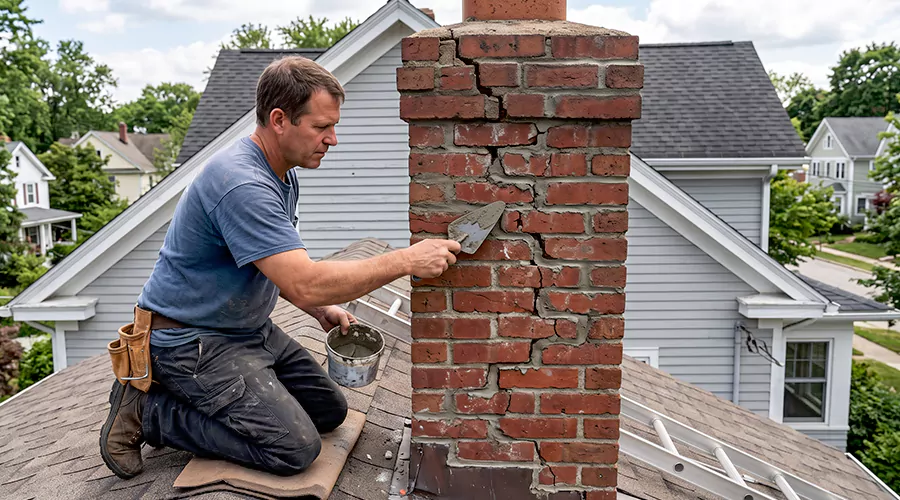
What Causes Chimney Mortar to Crack?
Mortar holds chimney bricks together and blocks moisture. Freeze and thaw cycles, water damage, and aging cause joints to crack, leading to leaks and loose bricks.




Based on 500+ Reviews

Proudly American
Owned & Operated

Cracked chimney mortar is a common issue that can affect the strength, appearance, and water resistance of a chimney. Mortar plays an important role in holding chimney bricks together and creating a barrier that helps prevent moisture from entering the structure.
Over time, exposure to weather, temperature changes, moisture, and aging can cause mortar joints to weaken and crack. Even small cracks should not be ignored because they can allow water to enter the chimney and lead to more serious problems, including brick damage, leaks, and structural deterioration.
Understanding what causes chimney mortar to crack can help homeowners identify problems early and protect their chimney from further damage.
Mortar is the material placed between chimney bricks or stones. It provides stability and helps keep individual masonry units connected.
Healthy mortar helps:
When mortar cracks or deteriorates, gaps can form where water can enter the chimney system.
Several factors can cause chimney mortar joints to crack over time.
The most common causes include:
One of the biggest causes of chimney mortar cracks is repeated freezing and thawing.
The process occurs when:
Over many cycles, mortar can become weak, loose, and unable to properly protect the chimney.
Signs of freeze-related mortar damage include:
Water is one of the most common causes of chimney mortar deterioration.
Moisture can enter through:
Once water enters the mortar, it can weaken the material over time.
Moisture-related mortar problems may appear as:
Repairing water entry points is important because replacing mortar without fixing the moisture source may only provide a temporary solution.
Like other building materials, mortar becomes weaker as it ages.
Over many years, mortar may experience:
Older chimneys are more likely to develop cracked mortar because they have experienced years of:
Regular inspections can help identify aging mortar before major deterioration occurs.
Chimneys experience frequent temperature changes because they are exposed to outdoor conditions and heat from fireplace use.
Temperature changes cause masonry materials to:
Repeated expansion and contraction can create stress on mortar joints.
Over time, this stress may cause:
The quality of the original mortar work can affect how long chimney joints last.
Mortar may crack prematurely because of:
The mortar used for chimney repairs should be compatible with the existing brick and masonry.
Using the wrong material can create additional cracking.
A chimney leak can accelerate mortar damage.
Common sources of water leaks include:
| Source | How It Damages Mortar |
|---|---|
| Chimney crown cracks | Allows water from the top |
| Flashing failure | Allows water near chimney base |
| Damaged cap | Allows rain into chimney |
| Masonry cracks | Allows moisture absorption |
When water repeatedly enters the chimney structure, mortar joints can weaken and deteriorate.
Movement in the chimney structure can place stress on mortar joints.
Possible causes include:
Structural movement may cause:
Large or spreading cracks may indicate a more serious structural issue.
Mortar can also deteriorate due to chemical exposure.
Potential sources include:
Over time, chemicals may weaken mortar materials and reduce durability.
A chimney that is not regularly maintained is more likely to develop mortar problems.
Without maintenance, homeowners may miss:
Small mortar problems can become larger repairs when left untreated.
Common warning signs include:
| Sign | Possible Problem |
|---|---|
| Visible cracks between bricks | Mortar deterioration |
| Missing mortar | Joint failure |
| Loose bricks | Weak mortar support |
| Crumbling joints | Moisture or aging damage |
| White stains | Water movement through masonry |
| Water leaks | Damaged moisture protection |
These signs indicate that the chimney should be evaluated.
Yes. Cracked mortar can allow water to enter the chimney structure.
Once moisture enters through damaged joints, it can affect:
Water intrusion can also accelerate additional mortar deterioration.
The most common repair method is chimney repointing.
The process usually involves:
Repointing restores the connection between bricks and helps prevent further moisture entry.
Small mortar repairs may seem simple, but chimney repair requires proper materials and techniques.
Challenges include:
Professional evaluation may be recommended when:
Preventive maintenance can help extend the life of chimney mortar.
Helpful steps include:
Keeping moisture away from the masonry system is one of the best ways to protect mortar joints.
Mortar repairs should be considered when you notice:
Early repairs can prevent more extensive masonry damage.
Chimney mortar cracks are commonly caused by moisture exposure, freeze and thaw cycles, aging, temperature changes, poor installation, and structural movement. Because mortar protects the connections between chimney bricks, damaged joints can allow water to enter and create larger problems over time. Repairing cracked mortar early helps protect the chimney structure and prevent costly repairs.
Regular inspections, proper maintenance, and timely repointing can help keep chimney mortar strong and improve the overall durability of the chimney system.
Common causes include moisture damage, freeze-thaw cycles, aging, temperature changes, and poor mortar installation.
Yes. Damaged mortar joints can often be repaired through chimney repointing.
Yes. Cracked mortar can allow water to enter the chimney structure and cause moisture damage.
Regular chimney inspections can help identify mortar deterioration before it becomes a major problem.
No. Chimney repairs require compatible masonry materials designed for the specific application.
Yes. Small cracks can allow moisture to enter and may become larger over time.
Mortar holds chimney bricks together and blocks moisture. Freeze and thaw cycles, water damage, and aging cause joints to crack, leading to leaks and loose bricks.
